
Table of Contents
- Why Minimalist Storage Matters for Your Home Gym
- Small Home Gym Storage Ideas That Maximize Your Space
- Workout Equipment Storage Ideas by Type
- Wall-Mounted Gym Storage for Compact Spaces
- Resistance Band Storage and Small Accessories
- DIY and Low-Cost Storage Solutions
- Safety, Load Limits, and Storage Setup
- Organizing by Room and Household Constraints
- Frequently Asked Questions
Last Updated: October 12, 2026
Why Minimalist Storage Matters for Your Home Gym
Minimalist home gym storage is about designing a fitness environment that supports your daily ritual without visual clutter or wasted effort.
When equipment is scattered, you lose momentum finding gear instead of focusing on your workout.
At IRONINFINITY, we treat storage as part of the design. When equipment is easy to access and the space feels intentional, people actually use it.
Minimalist storage also preserves your home's aesthetic, integrating your fitness setup so it enhances your space rather than dominating it.
Small Home Gym Storage Ideas That Maximize Your Space
Declutter Before You Store
The most common mistake is trying to store too much. Before buying racks or shelving, audit what you actually use.
Most home gym owners accumulate equipment they've outgrown or never used, an old resistance band set, replaced dumbbells, a foam roller that never fit their routine. These items consume space and mental energy.
Start here:
- Keep only equipment you've used in the last 90 days
- Be honest about what fits your actual workout style
- Donate or sell the rest
This step often frees up planned storage space, leaving a curated collection that reflects how you actually train.
Choose Multifunctional Equipment
Space-efficient equipment does double duty: a folding weight bench stores vertically, resistance bands replace a rack of dumbbells, and an adjustable dumbbell set eliminates dozens of individual weights. With multifunctional pieces, your minimalist home gym storage challenge shrinks, you're storing fewer items that serve more purposes. This extends to storage itself: a wall-mounted pull-up bar can hold resistance bands, and a shelving unit can store dumbbells and yoga mats.
Workout Equipment Storage Ideas by Type
Dumbbells and Weight Plates
Dumbbells eat floor space quickly. For adjustable dumbbells, a compact vertical rack holds 2-3 pairs in a corner; for standard dumbbells, a wall-mounted holder saves floor space while keeping weights visible. Weight plates need dedicated storage: a vertical plate tree takes less space than horizontal stacking, and wall-mounted storage works with proper anchoring.
Key considerations:
- Vertical storage uses less floor space than horizontal
- Wall-mounted options free up your floor entirely
- Ensure your storage can handle the weight safely
- Keep frequently used weights at eye level
Barbells and Bars
A barbell takes linear space, not floor space. Store it horizontally on a wall rack or vertically in a corner stand.
Horizontal wall racks work best for most apartments, holding the bar at chest height for easy grabbing. Vertical stands are more compact but need more floor space for safe access.
For multiple bars, a horizontal rack keeps them organized. Never lean bars against walls, they can damage surfaces and create safety hazards.
Yoga Mats and Foam Rollers
These items are easiest to store because they compress and stack. A wall-mounted mat holder keeps your yoga mat rolled and accessible, while foam rollers slide into a vertical tube holder or lean in a corner. A horizontal wall rack holds 3-4 rolled mats in the space of a single shelf.
Wall-Mounted Gym Storage for Compact Spaces
Wall-mounted storage is the most space-efficient approach for minimalist home gym setups, using vertical space that would otherwise sit empty, but renters and anyone avoiding permanent changes have effective alternatives.
Wall-Mounted Solutions: What Works and What to Watch
A wall-mounted pull-up bar doubles as a workout tool and storage point for resistance bands, with shelving above or beside it for smaller items, a functional workout zone without consuming floor space.
Critical safety note: Wall-mounted storage is only as strong as its anchoring. Drywall anchors alone cannot safely hold weights above 20 pounds; anchor into wall studs for heavy equipment. If unsure, hire a professional, a failed installation can cause serious injury or property damage.
Rental-Friendly and No-Drill Alternatives
If you rent or prefer not to drill, several options don't sacrifice minimalism.
Freestanding racks need no drilling. Heavy-duty weight racks use gravity and weight to stay stable, and they're portable if you relocate. The trade-off: more floor space than wall-mounted, but zero wall damage.
Tension rods fit between floor and ceiling, holding resistance bands without drilling, ideal for lightweight items in a corner or doorway. Over-the-door organizers with clear pockets hold resistance bands, jump ropes, and small accessories. Magnetic wall mounts adhere to metal studs for lightweight items like bands or clips, but check the weight rating, most hold only a few pounds. Adhesive hooks hold jump ropes or hand grips and leave no damage, but have low weight limits (typically under 5 pounds). Freestanding shelving units are stable when properly weighted; place heavier items on lower shelves to keep the center of gravity low.
Choosing Between Wall-Mounted and Freestanding
The decision comes down to your space, lease, and equipment weight.
- Wall-mounted: Best for permanent setups, heavier equipment, and maximizing floor space. Requires stud anchoring for safety.
- Freestanding: Best for renters, flexibility, and avoiding wall damage. Uses more floor space but can be moved.
- No-drill (tension rods, over-door, adhesive): Best for lightweight items and temporary setups. Not suitable for heavy weights.
For a minimalist home gym, keep equipment accessible and the space uncluttered, store items where you'll actually use them.
Resistance Band Storage and Small Accessories
Resistance bands and small accessories are the easiest items to store, and the easiest to lose. They scatter in drawers, under furniture, or at the bottom of a gym bag. A minimalist approach gives them a dedicated, visible home so you always know what you have and where it is.
Why Small Items Matter in a Minimalist Gym
In a minimalist setup, every item should have a purpose and a place. Resistance bands, jump ropes, hand grips, and small accessories are often the most-used tools because they're versatile and portable. Unorganized, they create visual noise and mental friction, you waste time searching and may forget what you own, leading to duplicate purchases. Group them by function and keep them visible.
Storage Solutions for Resistance Bands
Resistance bands come as loop bands, tube bands with handles, and flat therapy bands, each stores differently.
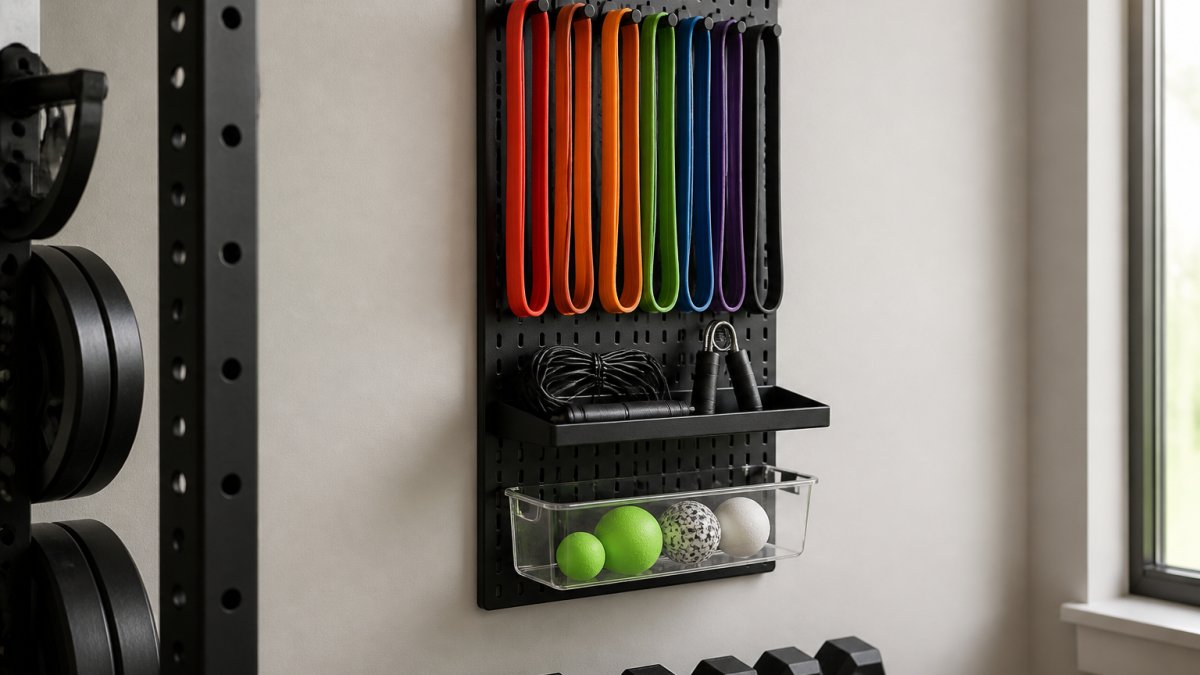
- Loop bands: Hang them on a wall-mounted pegboard using hooks, keeping them untangled and visible by resistance level. A pegboard also holds jump ropes and hand grips.
- Tube bands with handles: Bulkier, so an over-the-door shoe organizer with clear pockets works well, each band in its own labeled pocket.
- Flat therapy bands: Roll them up in a small bin or drawer organizer; a clear bin lets you see inside without digging.
Organizing Small Accessories
Small accessories like jump ropes, hand grips, lacrosse balls, and massage balls need a designated spot. Options:
- Wall-mounted shelf or cubby: Keeps items visible and accessible above your workout area.
- Drawer organizers: Use labeled dividers to separate items, hiding them from view but keeping them tidy.
- Magnetic strips: Mount one on the wall to hold metal items like clips or small weights.
- Pegboard: A classic for garages and gyms, holding hooks, bins, and shelves you can rearrange as equipment changes.
The Minimalist Approach: Less Is More
The biggest mistake with small accessories is keeping too many. If you haven't used a band or accessory in 90 days, let it go. A curated 3-5 resistance bands (light, medium, heavy) plus a few key accessories is enough for most home workouts. Apply the same principle to containers: one bin, one drawer, or one shelf for all small items.
Maintenance: The 5-Minute Reset
Small items get messy quickly. A weekly 5-minute reset, returning bands to hooks, accessories to their bin, tidying the area, keeps your minimalist gym functional. Pair it with a monthly check: still using everything? If not, donate or store it elsewhere.
DIY and Low-Cost Storage Solutions
You don't need expensive equipment for effective storage.
Simple PVC pipes become dumbbell racks: mount them horizontally on a wall with brackets, and dumbbells slide on for a clean display. Wall studs provide anchor points for DIY racks, and wooden shelving between studs costs less than commercial units. Old ladder shelving stores equipment vertically: yoga mats on one level, foam rollers on another, smaller items on a third. For weight plates, stacked cinder blocks with a wooden dowel create a sturdy, inexpensive stand.
Safety, Load Limits, and Storage Setup
Every storage solution has weight limits. Exceeding them creates safety hazards.
Wall-mounted racks need proper anchoring: drywall anchors alone won't hold heavy weights, so anchor into wall studs. A stud finder costs $15 and prevents damage or injury.
For freestanding racks, stability comes from weight distribution. A tall, narrow rack is less stable than a wide, low one, so place heavier items on lower shelves and keep the center of gravity low.
Organizing by Room and Household Constraints
Your storage solution depends on where you have space.
In a bedroom, wall-mounted racks along one wall create a dedicated workout zone without consuming floor space.
In a home office, vertical storage is essential.
In a small apartment, use corners and walls.
Creating a minimalist home gym storage solution transforms how you train at home.
Start by decluttering, choose multifunctional equipment, and match storage to your actual space and lifestyle.
OSHA guidelines on safe equipment storage and load limits provide standards for weight capacity and anchoring. The Minimalists' guide to intentional living offers frameworks for deciding what to keep. Home improvement best practices for wall anchoring explains proper installation techniques to ensure your storage stays secure.
Frequently Asked Questions
How do you store gym equipment in a small home?
Start by choosing equipment with a small footprint, dumbbells, resistance bands, and adjustable weights take less space than full racks. Use vertical wall-mounted storage to keep your floor clear, store items in designated zones by room, and invest in multifunctional pieces that serve multiple purposes. Declutter regularly by removing equipment you don't use, and consider freestanding compact racks that fit under beds or in closets.
What is the best way to organize a home gym?
Organize by equipment type and frequency of use. Keep daily-use items like dumbbells and resistance bands easily accessible; store occasional-use gear in closed storage. Use labeled containers, shelving, or wall-mounted racks to maximize vertical space. Create zones within your room so your minimalist home gym storage doesn't overwhelm your living area, and maintain a tidy workout area by returning items to their designated spots after each session.
How do you store resistance bands and workout accessories?
Store resistance bands in a dedicated drawer, small bin, or wall-mounted organizer to prevent tangling. Keep them away from direct sunlight to extend their lifespan. Group smaller accessories like jump ropes, hand grips, and straps together in clear containers so they're easy to find. Wall hooks or pegboards work well for hanging bands and keeping them visible and accessible without cluttering your floor space.
Can I set up minimalist home gym storage in a rental apartment?
Yes. Use no-drill wall-mounted solutions like adhesive hooks, tension rods, or freestanding racks that don't require permanent installation. Lean shelving units, under-bed storage, and closet organizers are renter-friendly options. Avoid drilling into walls or making permanent modifications. Focus on compact, movable storage that you can take with you when you move, and choose equipment with a smaller footprint to minimize your overall storage needs.