
Table of Contents
- What Makes Supportive Full Length Leggings Different for Training
- Squat-Proof Leggings: Understanding Opacity and Confidence
- Compression Leggings for Training: Support Without Restriction
- High-Waisted Gym Leggings: Fit, Coverage, and Stability
- Workout Leggings with Pockets: Practicality Meets Performance
- Inseam Length and Full-Length Fit: Getting the Right Proportions
- Choosing the Right Pair: Key Features to Evaluate
- Common Mistakes When Selecting Training Leggings
- Frequently Asked Questions
Last Updated: October 21, 2026
What Makes Supportive Full Length Leggings Different for Training
Supportive full length leggings for training deliver compression without restriction, keeping you stable through every squat, sprint, and stretch. Four elements separate them from generic leggings: moisture-managing, opaque fabric; compression that supports muscles without limiting movement; a high-waisted design that stays put; and construction details like seamless panels and reinforced seams.

At IRONINFINITY, we've analyzed what separates leggings that perform from those that merely look the part. Training leggings handle repeated stress, friction from weighted movements, sweat, and multidirectional motion, comfort that lasts through ten rounds of burpees, not just at rest.
The key distinction is intentional design: medium-to-firm compression, four-way stretch fabric, a high-rise waistband that anchors the fit, and an inseam that hits just above your ankle without pooling. Your gear must perform the same in rep one as in rep twenty.
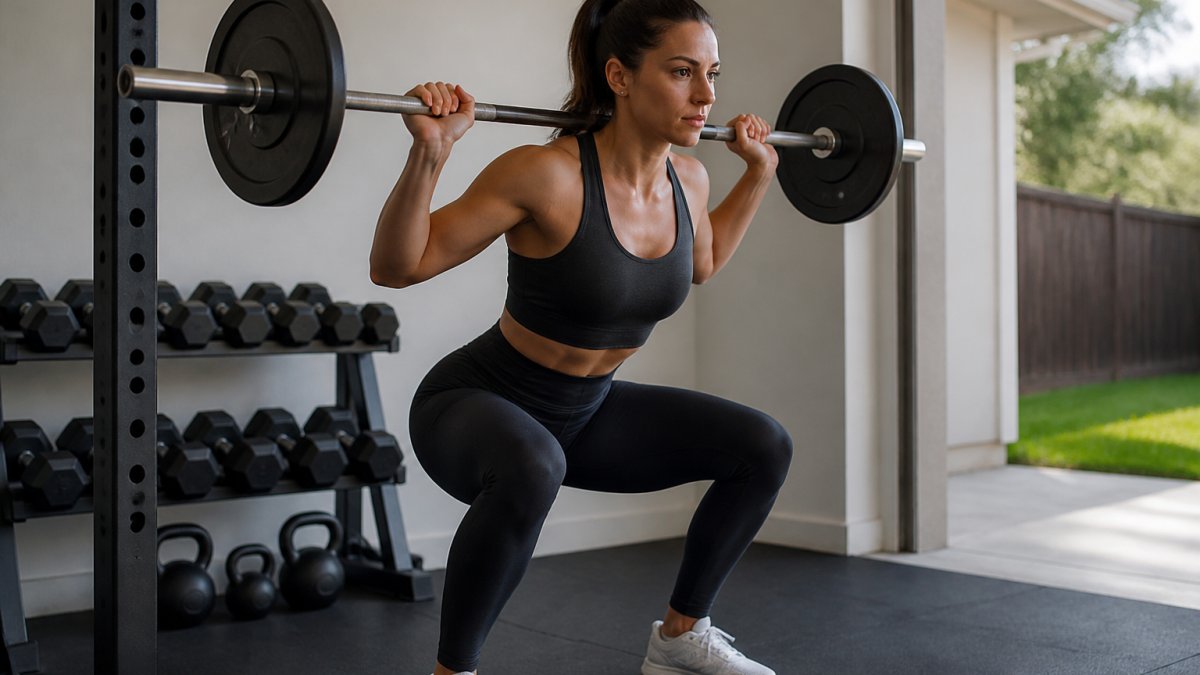
Squat-Proof Leggings: Understanding Opacity and Confidence
Squat-proof fabric is non-negotiable: it must not become sheer when you bend, stretch, or hold a loaded position. The test is simple: do a deep squat in bright light and check for skin tone or undergarment show-through.
Quality training leggings use a dense nylon-spandex knit that stays opaque under tension. Lighter materials (under 200 gsm) thin when stretched, while engineered fabrics (220+ gsm) hold their structure; a brushed inner surface adds opacity without bulk.
The Go Again Women's Full Length Legging from IRONINFINITY uses squat-proof fabric tested through loaded movements, maintaining coverage during deep squats, lunges, and overhead presses. When you're not thinking about transparency, you're thinking about the next rep.
Compression Leggings for Training: Support Without Restriction
Compression stabilizes your muscles and reduces vibration during impact and loaded movements, but the wrong level can limit performance.
Supportive compression (medium grade, roughly 15-20 mmHg) enhances blood flow and reduces fatigue without restricting range of motion. Restrictive compression (25+ mmHg) is for recovery and medical use, not training, overly tight leggings fight against muscles that need to fire freely.
Proper supportive compression leaves you held and stable, with less shaking in isometric holds and fresher legs in later sets. Restrictive compression leaves you squeezed, with narrowed range of motion and shallow breathing.
The Go Again Legging uses medium compression in the high-rise waistband and throughout the leg, supporting without constraining so you get core and leg stability with full freedom of movement.
Test compression leggings in a squat or lunge: if you feel restricted or your breathing changes, the compression is too high. You should feel supported and stable, not squeezed.
High-Waisted Gym Leggings: Fit, Coverage, and Stability
A high-waisted design is functional, not just aesthetic. The waistband sits at or above your natural waist, covering your lower back and supporting your core during compound movements, preventing rolling during heavy lifts, jumping, or dynamic stretching.
High-waisted leggings also stay put. A low-rise waistband slides down during weighted squats or mountain climbers, forcing constant readjustment; a high-waisted fit eliminates that distraction without cutting in.
Waistband material matters as much as height. A quality band uses a structured knit that holds shape without rigidity: supportive, not restrictive, moving with you when you bend and staying in place without digging in.
The Go Again Legging features a high-rise waistband with medium compression that stabilizes your core without limiting breathing and won't roll or slip during intense sessions, so you focus on form instead of gear management.
Workout Leggings with Pockets: Practicality Meets Performance
Pockets in training leggings are often overlooked but genuinely useful. Simplified side hip pockets carry your phone, keys, or a small card without bulk or bounce; placement matters, since pockets set too low or too wide create drag.
Quality training leggings use reinforced pocket construction so items stay secure without shifting, with an opening snug enough to prevent falls during dynamic movement but not so tight that reaching in disrupts your fit.
The Go Again Legging includes two simplified side hip pockets positioned for training. They hold a phone securely without adding bulk or changing the silhouette, removing a barrier to training at home or outdoors.
Test pockets with actual items: do they stay put during a jump, is the opening the right size, and does the weight pull the leggings off-center? These details separate leggings designed by people who train from those designed by people who don't.
Inseam Length and Full-Length Fit: Getting the Right Proportions
Full-length leggings should hit just above your ankle bone, without pooling at your feet or riding up your calf. But "full length" isn't one standard measurement: two size-medium athletes can need very different inseams depending on height, torso-to-leg ratio, and waistband rise.
Start with your actual inseam, not your height alone. Measure from your inner thigh at the crotch seam down to just above your ankle bone. Most people land somewhere between 24 and 32 inches. A common pattern looks like this:
- Under 5'2" (petite): 24-26 inch inseam usually gives full ankle coverage without bunching. A 28-inch inseam often pools at the ankle and drags under the heel during lunges and jumps.
- 5'2" to 5'6": 26-27 inches is the sweet spot for most body types. This is where a 26-inch inseam like the Go Again Legging typically lands just above the ankle.
- 5'7" to 5'10": 27-29 inches keeps coverage at the ankle. A 26-inch inseam may read as a 7/8 length on this frame, exposing the lower calf.
- 5'11" and taller: 29-32 inches is often needed to avoid a cropped look. Tall athletes frequently find standard full-length leggings stop mid-calf.
These are starting points, not rules. Leg length varies independently of height, so a 5'5" athlete with long legs may need a 28-inch inseam while a 5'9" athlete with a shorter leg line fits a 26-inch pair. Waistband rise also shifts the hem.
Why the hem position matters during training:
Go Again Women's Full Length Legging →
- Too short: The legging ends mid-calf, which can feel like it is riding up during squats and deadlifts. You may also lose the compressive wrap around the lower leg that some athletes prefer for stability.
- Too long: Fabric bunches under the heel or over the foot. During loaded movements, that extra fabric can catch on the floor, shift under your shoe, and increase wear at the hem. Pooling also creates a tripping hazard during sprints and jump work.
- Just right: The hem sits cleanly above the ankle bone, stays put through a full squat, and does not require tugging between sets.
A practical fitting test: check where the hem lands relative to your ankle bone, then do three deep squats, five walking lunges, and ten jump squats.
When ordering online, compare the listed inseam against your measured inseam rather than your usual size. Between lengths, choose shorter for high-intensity training (less fabric to catch) and longer for cold-weather running or full coverage.
Choosing the Right Pair: Key Features to Evaluate
Most legging guides tell you to check opacity, compression, and waistband fit. Those matter, but they only describe how leggings feel on day one.
1. Fabric opacity under tension, not just at rest. Stretch the fabric across your thigh in bright light and look for show-through.
**2.
3. Waistband stability through movement. A high-rise waistband should stay put during squats, jumps, and hinges without rolling or cutting in. Test it by bending forward, then standing and reaching overhead.
4. Seam construction and chafe points. Flatlock or bonded seams reduce friction during long sessions.
5. Fabric composition and recovery. A blend of roughly 75-85% nylon and 15-25% spandex delivers stretch, compression, and shape recovery.
6. Pocket placement and security. Side hip pockets should sit high enough not to drag during movement and snug enough to hold a phone without bouncing.
7. Inseam accuracy against your measured inseam. Compare the listed inseam to your own measurement rather than your usual size.
**8.
| Feature | Why It Matters | What to Test |
|---|---|---|
| Squat-proof opacity | Confidence during training | Stretch in bright light, then recheck after washing |
| Medium compression | Support without restriction | Squat and lunge; breathing should stay normal |
| High-waisted stability | No rolling or slipping | Bend forward, reach overhead, jump |
| Seam construction | Chafe-free movement | Feel inner thigh and crotch seams for bulk |
| Fabric recovery | Consistent compression over time | Stretch a panel; it should snap back |
| Pocket security | Essentials stay put | Jump and squat with a phone in the pocket |
| Accurate inseam | Proper ankle coverage | Compare listed inseam to your measurement |
| Care and durability | Long-term performance | Check care label; watch pilling and elasticity after washes |
A final note on price: cheap leggings often fail at the seam and recovery stage rather than the opacity stage, which is why they can look fine in the fitting room and disappoint after a month. Paying more upfront for dense fabric, flatlock seams, and good recovery is usually cheaper per training session than replacing a pair every season. The Go Again Legging is built around these priorities: medium compression, squat-proof dense knit, a high-rise waistband that stays put, simplified side hip pockets, and a 26-inch inseam.
Common Mistakes When Selecting Training Leggings
The most frequent error is choosing based on looks alone. Leggings that photograph well don't necessarily perform well. A sleek aesthetic doesn't guarantee opacity, compression, or durability.
Sizing up too much is another common mistake. Oversized leggings feel comfortable at first, but they shift during movement, roll down, and fail to provide stability.
Ignoring fabric composition leads to poor performance. Leggings with too much cotton or too little spandex lack recovery and durability. Quality training leggings typically use 75-85% nylon and 15-25% spandex.
Underestimating the waistband is a subtle mistake. A poor waistband ruins the entire experience, it rolls, slips, and cuts in. Test it before buying. This is non-negotiable.
Buying based on price alone often backfires. Cheap leggings pill quickly, lose shape after a few washes, and fail to provide compression.
Finally, many people choose leggings without testing them through actual training movements. In the fitting room, do a squat, lunge, overhead reach, and jump.
Choosing the right supportive full length leggings transforms your training experience. You move with confidence, your gear stays in place, and you focus on performance instead of adjusting your fit.
Frequently Asked Questions
How should supportive full length leggings fit during training?
Supportive full length leggings should fit snugly without cutting off circulation. The waistband should stay in place during movement without rolling down, and the fabric should feel secure through your hips and thighs. The inseam should reach just above your ankle, leaving no gap at the hem. If you're between sizes, sizing up offers a more relaxed fit while maintaining support through the compression.
What's the difference between supportive compression and restrictive compression?
Supportive compression hugs your muscles to stabilize them during movement while allowing full range of motion, ideal for strength training and high-impact workouts. Restrictive compression is tighter and can limit your movement or circulation. Look for leggings with four-way stretch fabric and medium compression that move with you, not against you. The Go Again Full Length Legging offers medium compression with 4-way stretch, designed to support without restricting your training movements.
Are full-length leggings suitable for both strength training and cardio?
Yes. Full-length leggings work for both strength training and cardio when they have adequate compression, breathable moisture-wicking fabric, and a secure waistband. For strength training, prioritize squat-proof opacity and hip support. For cardio, prioritize breathability and freedom of movement. Full-length coverage also provides sun protection and works in varied temperatures, making them versatile across workout types.
How can you tell if leggings are truly squat-proof?
Squat-proof leggings use dense, opaque fabric that doesn't become transparent when you bend or stretch. Check the fabric weight and composition, thicker, brushed materials and darker colors are more reliable than thin, shiny fabrics. Test the opacity by bending forward or doing a squat yourself if possible. The Go Again Legging is squat-proof and rep-tested, designed specifically to maintain opacity through every squat and movement.