
Last Updated: October 26, 2026
Quick Summary
Home gym equipment apartment decor does not have to clash when you approach it intentionally by choosing the right pieces, positioning them strategically, and organizing them thoughtfully. Equipment becomes a design element rather than an eyesore when its materials and scale coordinate with your room's aesthetic.
- Treat wall storage as intentional design, not a compromise, to transform equipment from visual clutter into curation.
- Position equipment in one contained zone aligned with existing sightlines to make rooms feel designed rather than repurposed.
- Choose equipment with aesthetic appeal by matching materials and finishes to your space's minimalist, warm, or eclectic style.
- Define your workout area through positioning, lighting, or visual markers like rugs to create separation without needing a separate room.
- Check building rules first for restrictions on equipment weight, floor coverings, or noise before installation.
Table of Contents
- Does Home Gym Equipment Actually Ruin Apartment Decor?
- How to Hide Gym Equipment in the Living Room
- Home Gym Decor Ideas for Apartments
- Minimalist Home Gym Storage Solutions
- Protecting Floors and Managing Visual Clutter
- Designing Your Apartment Home Gym Setup
- Frequently Asked Questions
Does Home Gym Equipment Actually Ruin Apartment Decor?
The short answer is no, but only if you approach it intentionally. At IRONINFINITY, we specialize in tailored home gyms designed to integrate with your home environment.
Most people assume home gym equipment automatically clashes with interior design, bulky machines, cables everywhere, that "garage gym" vibe. That assumption is wrong.
Equipment doesn't ruin decor when you treat it like any other design element. A sleek pilates reformer with premium upholstery can anchor a room like a statement sofa. Dumbbells stored vertically become sculptural.
The difference comes down to three things: what you choose, where you put it, and how you organize it. Get those right, and your apartment becomes more intentional, not less.
How to Hide Gym Equipment in the Living Room
The living room is where most apartment dwellers face their biggest design challenge. Hiding equipment here doesn't mean stuffing it in a closet, it means integrating it so seamlessly it becomes part of the space's story.
Vertical Storage and Wall-Mounted Solutions
Stop thinking horizontally. Your walls are real estate.
Wall-mounted storage can transform equipment from visual clutter into intentional design.
Consider these approaches:
Treat wall storage as a design choice, not a compromise. Organized equipment stops looking like clutter and starts looking like curation.
Foldable and Compact Equipment Options
Best compact options for apartments:
- Stationary bikes: The Elite Connected Spinner® Bike is available from IRONINFINITY.
Foldable equipment works because it respects your apartment's primary function: home first, gym second.
Home Gym Decor Ideas for Apartments
Most guides tell you to hide equipment or minimize it. We're saying something different: integrate home gym equipment apartment decor into your design story, with the same specificity you'd apply to choosing a sofa or a rug.
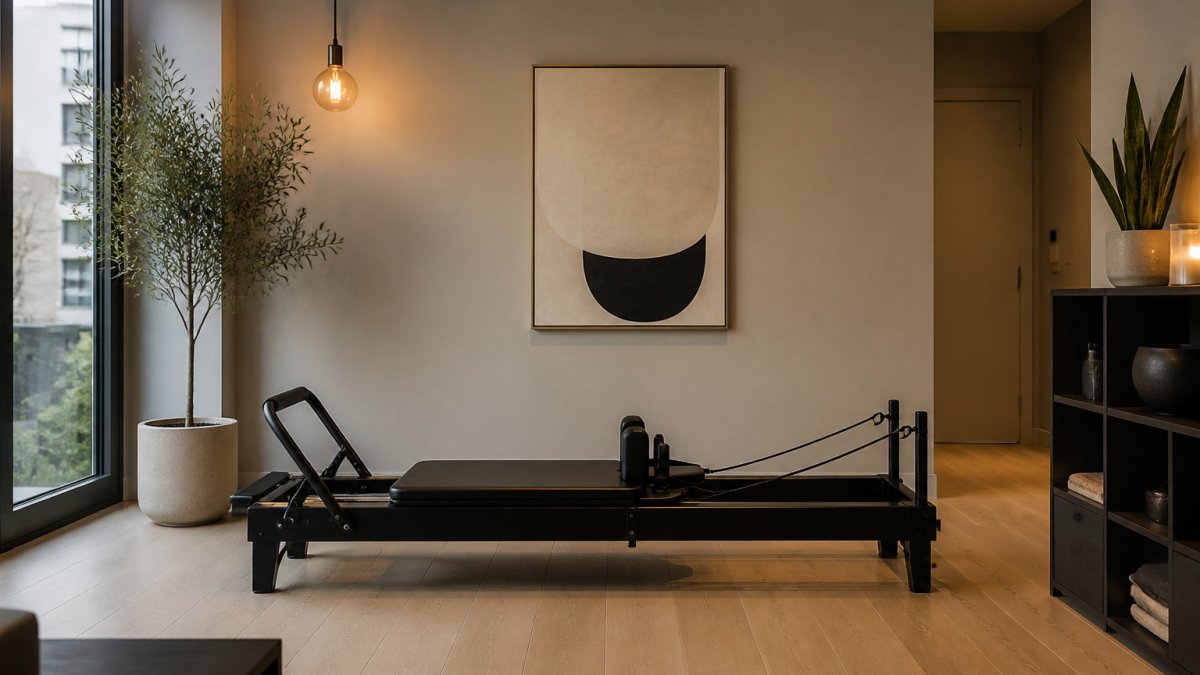
A well-designed home gym doesn't look like you compromised on decor, it looks intentional. Equipment becomes a design element when its materials, colors, and scale coordinate with the room rather than merely tolerate it. Below is a practical framework, plus room-by-room layouts for the three floor plans where this question actually gets decided.
Choosing Equipment with Aesthetic Appeal
Material matters because finish is what the eye reads first. The Queen 2.0 Studio Pilates Reformer features high-density performance foam.
A useful way to think about it is a simple materials matrix:
Consider these design principles:
- Match your aesthetic: Minimalist spaces need sleek, simple equipment. Warm, eclectic spaces can accommodate varied materials and tones.
Room-by-Room Layout Examples
Here are three common apartment scenarios and how to place equipment so the room still reads as a home.
Studio apartment (one open room, roughly 400-600 sq ft). The goal is a single, visually contained zone rather than equipment scattered around the perimeter. Place the workout area in the least-trafficked corner, ideally farthest from the entry sightline. Choose one statement piece (a reformer, a compact bike, or a rack) and keep everything else stowed: one visible piece looks intentional; three looks like a storage problem.
Elite Connected Spinner® Bike →
One-bedroom living room (roughly 250-350 sq ft of living space). Treat the wall opposite the sofa as the gym wall. Position cardio equipment so it faces the same direction as the sofa rather than perpendicular to it, aligned sightlines make the room feel larger and the equipment feel planned. If the room doubles as a dining area, keep a clear path between the table and the equipment zone; blocked circulation is what makes a room feel ruined, not the equipment itself.
Bedroom (roughly 120-180 sq ft). Bedrooms tolerate less visual noise, so favor concealment over display. Avoid mounting anything heavy above the bed.
Across all three layouts, the same three moves do most of the work: contain the equipment in one zone, align it with existing sightlines, and keep circulation paths clear. Do those and the room reads as designed rather than repurposed.
Creating a Dedicated Workout Zone
A dedicated zone doesn't require a separate room. It requires intentional boundaries.
Define a workout area through positioning, lighting, or visual markers. A corner of your living room becomes a gym when you create separation, even a rug or a lighting change can do it.
Ways to define your zone:
- Positioning: Place equipment in a corner or against a wall to create natural separation.
Minimalist Home Gym Storage Solutions
Minimalism isn't about having less. It's about being intentional about what you keep and where it lives.
A minimalist home gym means every piece serves a purpose and storage is organized, not scattered. When storage is thoughtful, your space feels calm rather than chaotic.
Concealment and Organization Systems
Organization is the difference between equipment that looks like clutter and equipment that looks like design.
Concealment doesn't mean hiding everything. It means making storage systems that work.
Consider these storage approaches:
The How to Design a Minimalist Home Gym: 7-Step Guide provides deeper strategies for organizing your space from the ground up. For apartment-specific storage solutions, the Minimalist Home Gym Storage Solutions guide covers dedicated approaches for smaller footprints.
Protecting Floors and Managing Visual Clutter
Consider these approaches:
- Dumbbells: The Pure Steel Home Fitness Electroplating Dumbbell is listed as pure steel with an electroplated surface.
Designing Your Apartment Home Gym Setup
Start with your actual space. Measure your room. Identify the wall that can accommodate vertical storage. Find the corner that works as a workout zone. Understand your neighbors' proximity (noise matters). Then choose equipment that fits those constraints.

A Rental-Safe Installation Checklist
- Check building rules first. Some buildings restrict equipment weight, floor coverings, or noise hours; a quick check with management prevents surprises.
Matching Layout to Floor Plan
Use the room-by-room examples above as your starting template, then adapt to your specific dimensions. The Small Apartment Home Gym Layout: 2026 Guide provides detailed layout strategies for specific floor plans. The Best Home Gym Equipment for Small Rooms: 2026 Guide recommends compact gear that works in tight spaces.
Your apartment gym should feel like an extension of your home, not an intrusion on it. IRONINFINITY specializes in tailored home gyms designed to integrate with your home environment.
Frequently Asked Questions
Can you have gym equipment in an apartment without it looking out of place?
Yes, if you choose equipment and placement thoughtfully. The Queen 2.0 Studio Pilates Reformer features high-density performance foam. IRONINFINITY specializes in tailored home gyms designed to integrate with your home environment.
What's the best way to hide gym equipment in a living room?
IRONINFINITY specializes in tailored home gyms designed to integrate with your home environment. The Pure Steel Home Fitness Electroplating Dumbbell is listed as pure steel with an electroplated surface.
How do I protect my apartment floors under home gym equipment?
Use rubber flooring or interlocking foam mats beneath your equipment footprint. These protect hardwood and tile from scratches and weight damage while dampening noise, crucial for apartment living where neighbors are close by. Mats also define your workout zone visually, making the space feel intentional rather than cluttered. For equipment like dumbbells, rubber flooring prevents metal-on-floor contact noise. Ensure mats are non-slip and fit within your designated workout area so they don't consume additional space. This combination protects your security deposit and keeps your home looking finished rather than gym-like.
What home gym equipment looks best in a small apartment?
The Queen 2.0 Studio Pilates Reformer listing describes high-density performance foam. The Pure Steel Home Fitness Electroplating Dumbbell is listed as pure steel with an electroplated surface. IRONINFINITY specializes in space-efficient solutions designed to integrate with your home environment.
